
Anyone who wants to be visible online cannot avoid producing high-quality and trustworthy content—especially when it comes to sensitive YMYL (“Your Money, Your Life”) topics such as health, finance, or law. This article shows how the E-E-A-T concept developed by Google can be applied in practice to websites and why it is becoming increasingly important not only for traditional search engines, but also for AI-based systems and large language models (LLMs).
Website operators who cover sensitive topics need to consider a number of factors to ensure that Google classifies their pages as trustworthy. As is well known, Google classifies pages on topics such as health, finance, and law as YMYL websites, which are subject to particularly rigorous evaluation by the search engine. Even though E-E-A-T is primarily relevant for websites dealing with YMYL topics, all website operators should follow this principle in order to increase their chances of reaching top positions in search results and being cited as a source in AI search.
Search Quality Raters
First, it should be noted that despite the current AI hype, Google is still the most widely used platform for web search. For that reason, it is worth taking a closer look at the E-E-A-T concept developed by Google. Research also shows that adhering to E-E-A-T helps websites get considered by AI search engines such as ChatGPT, Perplexity, and others. This is also confirmed by studies from other leading SEO experts.
Google employs so-called “quality raters” to assess the quality of websites. Although these ratings do not directly affect rankings, they help Google refine and adjust its algorithm. In this way, quality rater evaluations have at least an indirect influence on rankings.
Google beschäftigt sogenannte ‚Quality Rater‘, um die Qualität von Webseiten zu bewerten. Diese Bewertungen haben zwar keine direkten Auswirkungen auf das Ranking, helfen Google jedoch dabei, den Algorithmus anzupassen. Somit haben die Bewertungen der Quality Rater zumindest indirekt Einfluss auf das Ranking.
Search Quality Rater Guidelines
It is advisable for all website operators to read Google’s Search Quality Rater Guidelines at least once. These guidelines contain helpful indications of how Google evaluates a page. They include both positive and negative examples that website operators can use as reference points to optimize their content accordingly. Figure 1, for example, shows that a news site covering a YMYL topic receives a low E-E-A-T rating because it contains obvious grammar and punctuation errors. In addition, the main content appears to have been paraphrased from another article and also contains factual inaccuracies.
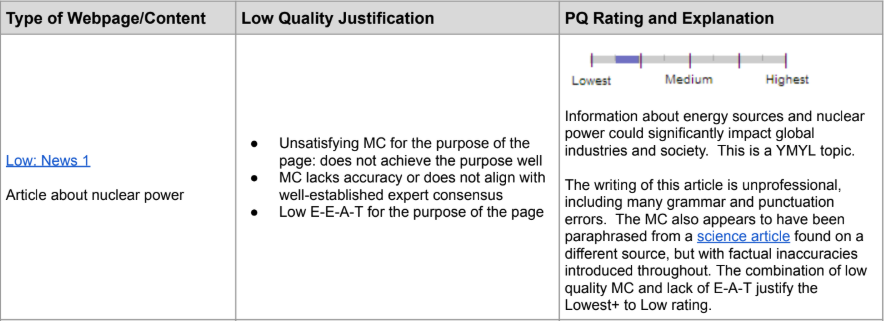
Figure 1: Negative example (Source: Google Search Quality Rater Guidelines)
Figure 2 shows a positive example from Google’s quality rater guidelines. A website that can be classified under health topics received the highest E-E-A-T rating because it includes a functional, user-friendly BMI calculator. In addition, the website is operated by a national health organization, which Google interprets as a sign of outstanding authority. Accordingly, the quality raters’ evaluation is very positive.
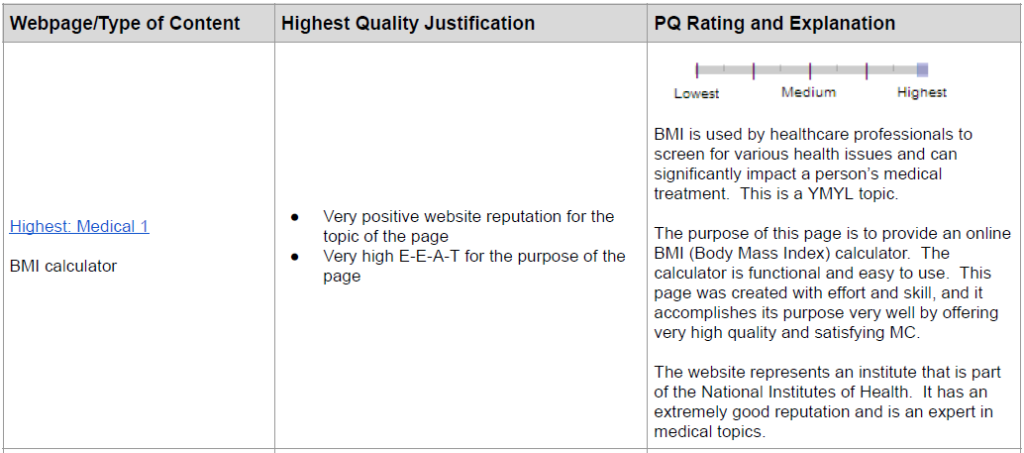
Figure 2: Positive example (Source: Google Search Quality Rater Guidelines)
The Quality Rater Guidelines contain dozens of such examples and give us, as website operators, a good sense of what Google values in a website. The two examples above make it clear that Google rewards websites that provide “unique content.” In addition to well-written texts, this can also include useful tools, such as the BMI calculator shown in Figure 2. Google also attaches great importance to reputation, because it is difficult to manipulate or buy. Reputation is usually the result of many years of work and consistently high-quality content.
E-E-A-T
E-A-T was first mentioned in the Search Quality Rater Guidelines in 2014. In 2022, E-A-T was expanded with an additional “E” for Experience. As already indicated, Google focuses on specific quality characteristics when evaluating a website. The following sections explore E-E-A-T in more detail and provide concrete recommendations on how experience, expertise, authoritativeness, and trustworthiness can be demonstrated on a website.
It should be noted in advance that many page elements can be assigned to multiple E-E-A-T categories. For example, positive user ratings and customer reviews can convey both practical experience and subject-matter expertise. Google itself acknowledges in its guidelines that experience, expertise, and authoritativeness can overlap for certain websites (Figure 3). With this statement, Google wants to illustrate that for some types of pages it is more important that web authors have practical experience with the topic—for example, in product experience reports. However, when a website provides medical or legal advice, i.e., YMYL topics, the author’s expertise is crucial so that users can trust the content.
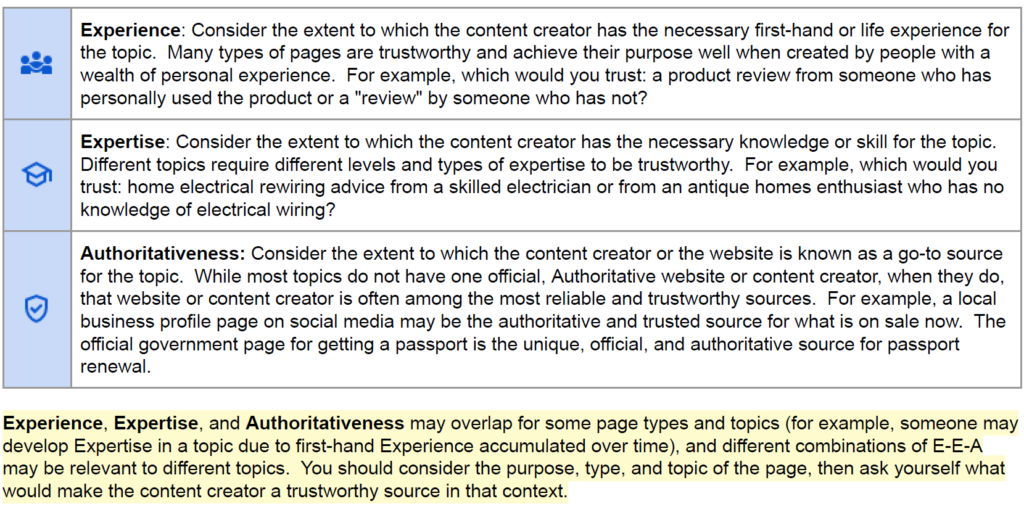
Figure 3: Experience, expertise, and authoritativeness are not always clearly separable. (Source: Google Search Quality Rater Guidelines)
Even if the individual aspects—experience, expertise, authoritativeness, and trust—cannot always be clearly separated, each point is explained below, and it is shown how E-E-A-T as an overall concept can be implemented on a website.
Experience
Within Google’s E-E-A-T concept, it has become clear how central the factor of “experience” has now become. Since the addition of the “Experience” component, there has been a much stronger focus on ensuring that content is not only theoretically correct but also conveys real practical relevance. To communicate “experience” on a website, you do not need to be a recognized expert in the field—that is what “expertise” is for. For example, if someone has been living with a particular illness for years, they may look for experience reports from other affected people to help them cope better with the situation: Which treatments helped? Which medications were not tolerated at all? What helped emotionally?
Or perhaps you run a website about DIY and home improvement. In that case, explanatory videos and step-by-step instructions—for example, how to assemble a wardrobe—are exactly what your visitors are looking for.
There are many ways in which even non-experts can demonstrate experience on their own website. Personal experience reports and how-to guides are likely the most common formats for making “experience” visible. At the same time, user behavior (user experience) plays a crucial role. Google does not evaluate every single page in depth, but instead relies heavily on user signals such as click behavior, dwell time, and bounce rates. E-E-A-T should therefore be understood less as a pure SEO checklist and more as a strategic framework for shaping content quality in a way that genuinely convinces people. If a website succeeds in credibly conveying experience, expertise, and authoritativeness—and creates an overall trustworthy impression—this has a positive impact on user signals and ultimately increases the chances of greater visibility online.
.
Expertise
Within Google’s E-E-A-T concept, the professional expertise of authors plays a central role—alongside experience and authoritativeness, it is crucial for building trust with users. A rough distinction can be made between formal and content-based expertise. Formal expertise is reflected in verifiable qualifications such as academic degrees, certifications, or professional titles. Content-based expertise becomes visible directly in the text: anyone who explains a topic precisely, factually correctly, in a well-structured way, and with sufficient depth signals subject-matter knowledge.
Another important factor is authors’ external visibility. Publications in professional journals, book releases, interviews, or contributions in established media formats are strong indicators of competence and should be transparently communicated on the website—for example, by linking to such content. Author profiles that provide qualifications, publications, and other relevant information are a strong signal of expert status not only for search engines but also for website visitors.
.
Authoritativeness
Authoritativeness is one of the central quality dimensions in Google’s E-E-A-T concept. It refers to the reputation and recognition of a website or an author within a specific field—i.e., whether a source is perceived as a reliable authority.
This is best established through external signals: mentions on other thematically relevant websites and, above all, high-quality backlinks. When reputable sites link to content, it acts like a recommendation—both for users and for search engines. Over time, the accumulation of such links and mentions plays a major role in building “domain trust” and establishing a website as an authority in its subject area.
Closely linked to this is brand awareness: the more visible a brand is around a specific topic and the more frequently it is associated with relevant rankings, the more strongly its authoritativeness is perceived. In short: strong external references and a well-positioned brand are the key levers for building authoritativeness in the sense of E-E-A-T.
Studies suggest that authoritativeness is the decisive factor for appearing in LLM search results. A similar conclusion was reached by the founder of the GEO tool “Lorelight,” who discontinued the tool because he came to the conclusion that GEO optimization is essentially nothing more than brand building. Christian Kunz discusses this topic on his website SEO-Südwest.
This example shows how important it has become today to build a brand—or to be perceived as an authority within your industry—in order to remain visible online in the long term.
Dieses Beispiel zeigt, wie wichtig es heutzutage ist, eine Marke aufzubauen bzw. als Autorität in der eigenen Branche wahrgenommen zu werden, um langfristig im Internet sichtbar zu bleiben.
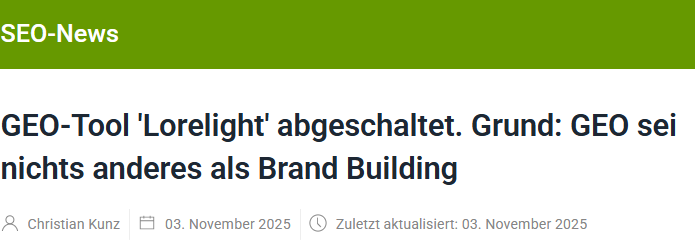
Figure 4: Is GEO nothing more than brand building? (Source: seo-suedwest.de)
Trust
In Google’s E-E-A-T concept, trust is the central factor that all other dimensions feed into. Especially in sensitive areas such as health or finance, the following applies: without clear trust signals—such as a complete legal notice (imprint), clear accountability, and transparent contact options—classic SEO measures quickly lose effectiveness.
Trust is created above all through transparency and authenticity. This includes a clearly visible “About us” page that introduces the people and roles behind the website, as well as real photos instead of generic stock images—for example, the doctor in her practice or a company team. The more clearly it is recognizable who is responsible for content and offerings, the greater the trust bonus for users.
A second layer consists of external validation: links to official profiles such as Google Business or industry-specific directories, certificates and seals of approval, positive reviews on platforms like Trustpilot, as well as an “As featured in” section with logos of reputable media outlets. A coherent, authentic social media presence also helps underline credibility and trustworthiness.
Also important are the quality of the content and the overall impression of the website. Well-researched, clearly presented texts with source references appear professional and verifiable. A clean, user-friendly design without excessive advertising signals that the offering is taken seriously. In addition, technical foundations such as SSL encryption, fast loading times, and a well-configured site structure strengthen so-called “domain trust.”
Ultimately, trust is not a single feature but the result of many factors working together—from transparent responsibility and external reviews to a solid technical foundation. This overall impression is what determines, in the sense of E-E-A-T, whether content is perceived as high-quality and reliable.
The importance of E-E-A-T in AI search
Current findings from research and practice suggest that E-E-A-T plays a central role not only for traditional search engines but also for AI-based search systems such as ChatGPT Search or Perplexity. AI assistants tend to rely on sources that are considered trustworthy and authoritative. This makes it clear: anyone who performs well on Google with high-quality, well-structured content and clear expertise simultaneously improves their chances of appearing in AI-generated answers.
Current LLM search systems still rely heavily on existing search indexes such as those from Google or Bing. In practice, websites that offer comprehensive, information-oriented content and consistently align with E-E-A-T are cited significantly more often by AI systems or used as sources. Competitors with weaker content quality or lower authority, by contrast, often remain invisible—both in traditional search results and in AI-generated answers.
What matters is not only the number of backlinks but especially the topic-relevant presence of a brand or website online: mentions on specialist sites, on social networks, or on video platforms increase the likelihood of ending up in training data and output sets of AI models. In short: anyone who wants to be visible in AI search cannot avoid E-E-A-T. A long-term investment in trustworthy, high-quality content pays off both in rankings in traditional search engines and in visibility in LLM-based search systems.
How important authoritativeness is for visibility in LLMs has already been described and can be made even clearer with an example: ChatGPT was asked which provider offers the best refrigerators for medications. The company Kirsch was named in first position. From an SEO perspective, there are certainly websites that are better optimized. However, there is only one market leader for medication refrigerators in Germany. The AI “knows” this, recognizes the brand’s high authoritativeness, and therefore places it at number one in the list.
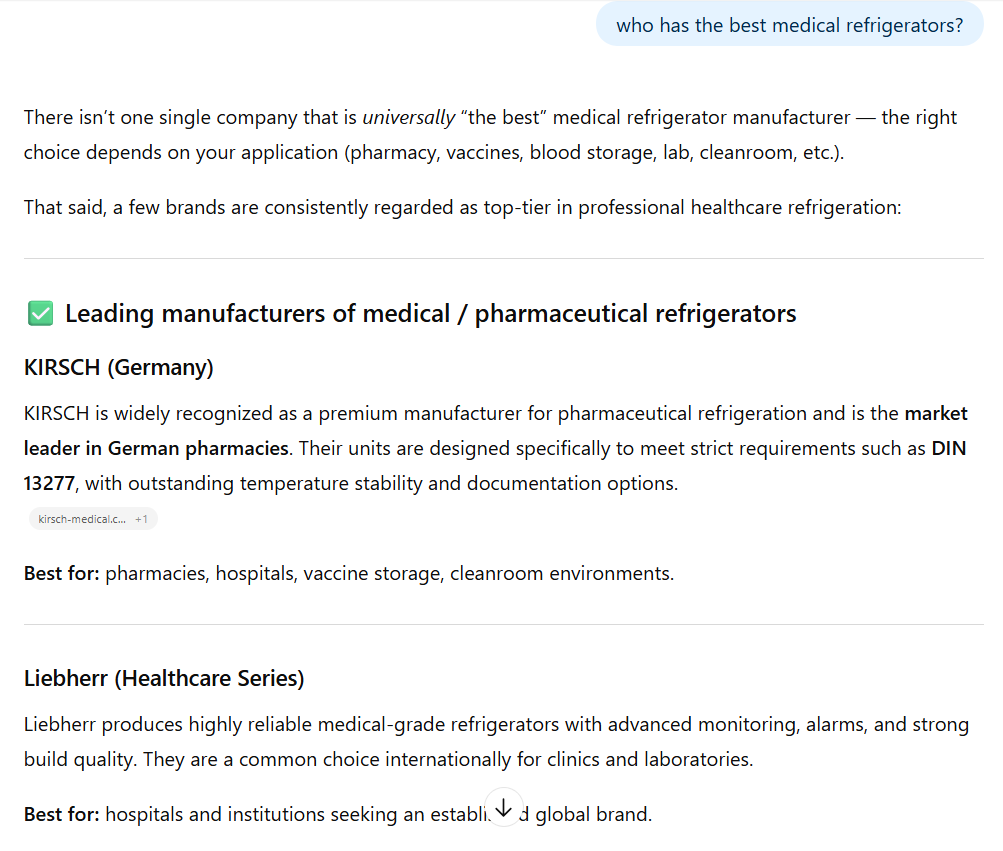
Figure 5: The best medication refrigerators (Source: ChatGPT)
The relevance of E-E-A-T for other search engines
Especially companies operating in the B2B sector still see a relevant share of their traffic coming from the Bing search engine. Kirsch-medical.de, for example, reportedly receives around 15% of its website visitors via Bing. Against this background, the question arises whether implementing Google’s E-E-A-T concept also helps websites be found more easily in other search engines.
Research shows that Bing uses content quality standards similar to Google (Figure 5). Bing also aims to protect users from dubious content and to display reliable information in the SERPs (search engine results pages). Although Bing has its own evaluation criteria, it aligns closely in terms of content with what Google considers high-quality results.
This brings E-E-A-T into focus not only for Google but also for alternative search engines like Bing. Content that conveys experience, expertise, authoritativeness, and trust generally has a better chance of being prominently displayed—regardless of which search engine is behind it. In most cases, what works for Google also helps with Bing.
Implementing E-E-A-T principles is therefore a sensible strategy for overall search visibility. Search engines want to retain users and deliver good results. Factors such as authoritativeness, trustworthiness, and demonstrable quality always play a role—even if they are not labeled identically or implemented in the same technical way by every provider.

Figure 6: Bing’s Three Pillars of Content Quality (Source: Bing)
E-E-A-T table
E-E-A-T should always be viewed as a whole. For example, it is not enough to fulfill only the “experience” component and neglect “authoritativeness.” That would not work anyway: if you have sufficient experience and expertise in a field, you will inevitably become an authority in that field. High authoritativeness, in turn, leads users and search engines to trust the content, which ultimately results in greater brand visibility online.
It is therefore no coincidence that Google depicts E-E-A-T as overlapping circles rather than separate blocks. Figure 6 illustrates that experience, expertise, authoritativeness, and trust form a unit, with trust at the center of the E-E-A-T family.
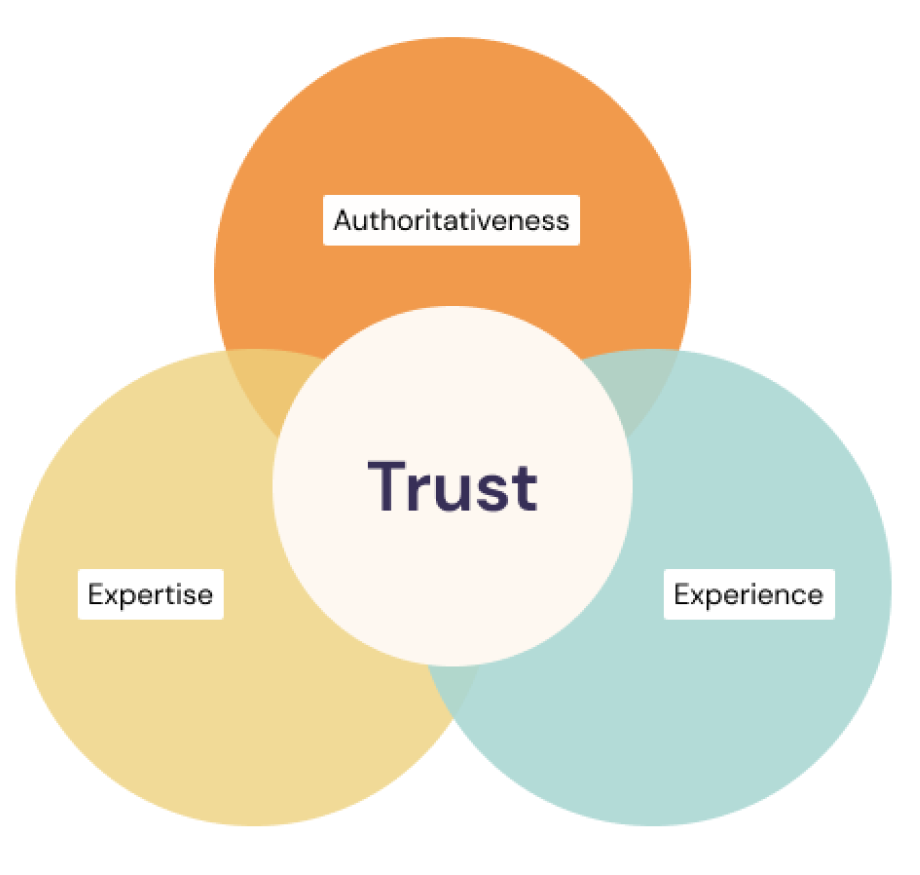
Figure 7: E-E-A-T (Source: Google)
Figure 7 shows a table that was developed to help website operators formulate concrete measures for implementing E-E-A-T on their websites.
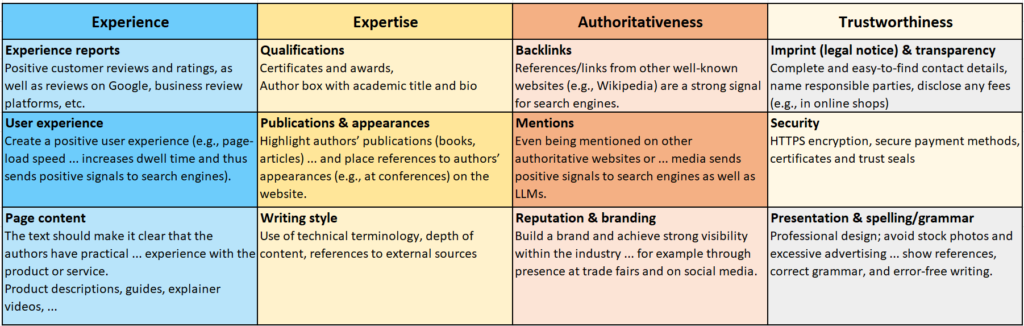
Figure 8: E-E-A-T table (Source: own illustration)
Conclusion
E-E-A-T is now far more than a theoretical concept from Google’s guidelines. In practice, experience, expertise, authoritativeness, and trust form the framework for how content is perceived, evaluated, and ultimately found online—both by traditional search engines and by AI-based systems. Especially for websites dealing with sensitive YMYL topics, consistently aligning with these principles is essential to combine visibility, credibility, and responsibility toward users.
Strong rankings are not the result of individual tricks, but of many factors working together: authentic experience reports, expertly grounded content, clear author profiles, strong brand presence, positive reviews, a trustworthy technical setup, and thoughtful web design. Anyone who takes E-E-A-T seriously is not only optimizing for Google, but also for Bing and other search systems—and additionally increases the chances of appearing in answers from LLMs such as ChatGPT or Perplexity.
For website operators, this means: instead of short-term “SEO hacks,” a long-term content strategy is needed—one that focuses on quality, transparency, and brand building. Those who consistently invest in these areas create the foundation to remain visible, relevant, and trustworthy in an increasingly AI-shaped search landscape.
Leave a Reply